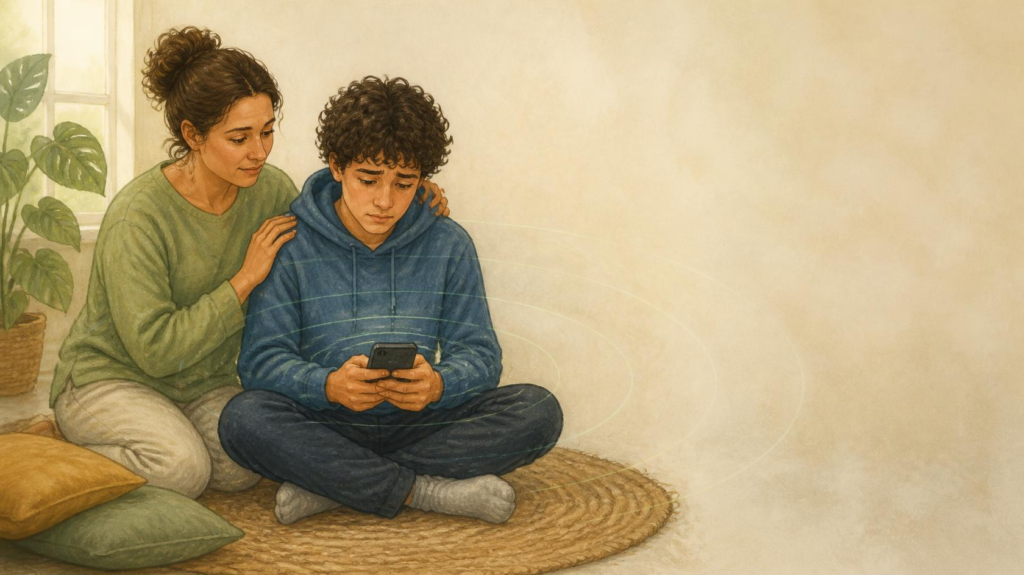
Has a small comment, a look or an unanswered text ever hurt far more than you expected? Maybe the feeling arrived in seconds and stayed with you for hours.
If so, you’re not “too sensitive”. You may be experiencing rejection sensitivity. It’s common in ADHD and autistic people, and in people who’ve been hurt in relationships before. In this post, we explain what it is, why it hurts so much, and what can help.
At a glance
- Rejection sensitivity means expecting, noticing and reacting strongly to rejection or criticism. The pain is real.
- It isn’t a diagnosis on its own. It can show up with ADHD, autism, borderline personality disorder (BPD), trauma and more.
- The same feeling can have different roots. Understanding why it happens points to the support that fits.
What is rejection sensitivity?
Psychologists describe rejection sensitivity as a tendency to anxiously expect rejection, quickly notice it, and react strongly to it.[1] The hurt can feel much bigger than the moment that sparked it.
You may also hear the term rejection sensitive dysphoria (RSD), especially in ADHD communities. RSD isn’t a formal diagnosis, and research on it is still early. But many people find the words helpful. In one study of 43 young adults with ADHD, 33 described experiencing it.[2]
People often describe:
- A sudden, sharp hurt
- Feeling it in the body
- Replaying the moment
- Harsh self-blame
- People-pleasing
- Pulling away or going quiet
Rejection sensitivity matters for wellbeing. A large review linked it with depression, anxiety, loneliness and BPD.[3]
Same feeling, different roots
Rejection can hurt deeply for different reasons. Here are three common ones. They can also overlap. Someone may be ADHD and autistic, and carry past hurt too.
With ADHD
- What’s underneath
- Emotions often arrive fast and big. ADHD brains can find it harder to slow a strong feeling once it starts.
- Common triggers
- Criticism, but also feeling you’ve failed or let someone down. Young people with ADHD traits report more rejection sensitivity than their peers.[4]
- How it can pass
- For many people, the wave hits hard and then eases once things are cleared up or they feel reassured.
With autism
- What’s underneath
- Often years of being misunderstood. Many autistic adults mask to fit in and avoid being singled out, which can leave them exhausted and feeling unlike themselves.[5]
- Common triggers
- Criticism can confirm an old fear of “not fitting in”. It can hit harder on days already stretched by sensory overload, change or social effort.
- What it isn’t
- Autistic people aren’t being “dramatic”. Different ways of communicating are just that: different.
With BPD
- What’s underneath
- Rejection can feel tied to a deep fear of being left. Research consistently links rejection sensitivity with BPD, and with early experiences such as emotional neglect.[6]
- How it can feel
- A small conflict can feel like a whole relationship is ending. This comes from pain, not from wanting to cause trouble.
- What often helps
- Skills from Dialectical Behaviour Therapy (DBT) for big emotions and relationships, alongside trauma-informed care.
Why the cause matters
From the outside, ADHD, autism and BPD can look alike. Big emotions, relationship stress and acting on impulse can show up in all three. So people, especially women and girls, are sometimes given the wrong label, or none at all.
A good psychologist looks past what you’re doing to why. For example:
- Is it a fear of being left?
- Is it a fast, big wave of emotion?
- Is it exhaustion from masking or sensory overload?
- Is it shame or disconnection tied to family or culture?
The answer shapes the support that will actually help.
Culture, community and belonging
Rejection sensitivity isn’t only about the brain. It’s also shaped by your life, family and culture.
- When belonging is everything. In many Aboriginal and Torres Strait Islander communities, and in many Asian, African and Pacific cultures, identity is closely tied to family, kin and community. Criticism can feel like being cut off from your whole support system.
- When rejection is systemic. Racism, exclusion and intergenerational trauma are real. A small rejection can stir up a much bigger, older hurt.
- Our approach. We look at your whole context, including family, history and community, so support feels respectful and relevant. Read more in Navigating “Hiya”.
Culturally safe support lines
13YARN on 13 92 76 is a free, 24/7 crisis support line for Aboriginal and Torres Strait Islander people, run by Aboriginal and Torres Strait Islander people.[8]
The Transcultural Mental Health Line on 1800 648 911 offers free phone support in NSW for people from culturally and linguistically diverse backgrounds, 9am to 4:30pm on weekdays.[9]
Gentle things that can help
A 2025 study with neurodivergent adults found that accepting people, clear communication, self-compassion and neurodivergent community all eased rejection sensitivity.[7] Here are some small ways to start. Take what’s useful and leave the rest.
- Name it. Try saying “This is rejection sensitivity.” Naming the feeling can create a little space from it.
- Settle your body first. Slow breathing, a walk, a quiet room or a favourite sensory item. Big decisions can wait until the wave passes.
- Check the story. Ask yourself, “What else could explain this?” A short reply might just mean someone is busy.
- Ask directly, if it feels safe. “Are we okay?” is a fair question. Clear answers often ease the hurt faster than guessing.
- Find your people. Spend time with people who accept you as you are, including other neurodivergent people.
- Speak to yourself kindly. Talk to yourself the way you’d talk to a good friend who was hurting.
How Psychcare can help
- Assessments that look for the “why”. Our neuro-affirming ADHD and autism assessments look at strengths, support needs and how your traits interact, including AuDHD.
- Therapy matched to the cause. This may include DBT skills for big emotions, ADHD-informed strategies, or neuro-affirming therapy for masking and burnout.
- Healing older hurts. When rejection sensitivity is linked to past trauma, EMDR therapy may help.
- Culturally sensitive care. We consider your family, culture and community, not just your symptoms.
Sessions are available at our Wahroonga clinic or by telehealth anywhere in Australia.
Common questions
Is rejection sensitive dysphoria a real diagnosis?
Not formally. RSD isn’t listed as a diagnosis, and research is still developing. But rejection sensitivity itself is well studied, and the pain people describe is real and worth support.
Is it the same as being “too sensitive”?
No. Rejection sensitivity is a pattern in how the brain and body respond to perceived rejection. It isn’t a weakness or a character flaw.
Do I need a diagnosis to get help?
No. You can start therapy for rejection sensitivity without a diagnosis. If you’d like to understand whether ADHD, autism or both are part of the picture, an assessment can help.
Can my child have rejection sensitivity?
Yes. Children and teens can feel rejection very strongly too. We work with children, adolescents and their families.
Keep reading
Ready to understand your emotions?
You don’t have to manage overwhelming feelings alone. Understanding where they come from is the first step toward lasting change. Book online, call us, or start with a free 15-minute chat.
(02) 9037 3509Suite 4 & 5, 5 Redleaf Avenue, Wahroonga NSW 2076. Telehealth Australia-wide. Psychcare is not an emergency service. If you or someone you know is in immediate danger, call 000 or contact Lifeline on 13 11 14.
Sources
- Downey, G., & Feldman, S. I. (1996). Implications of rejection sensitivity for intimate relationships. Journal of Personality and Social Psychology, 70(6), 1327–1343.
- Ginapp, C. M., et al. (2023). “Dysregulated not deficit”: A qualitative study on symptomatology of ADHD in young adults. PLOS ONE.
- Gao, S., Assink, M., Cipriani, A., & Lin, K. (2017). Associations between rejection sensitivity and mental health outcomes: A meta-analytic review. Clinical Psychology Review, 57, 59–74.
- Bondü, R., & Esser, G. (2015). Justice and rejection sensitivity in children and adolescents with ADHD symptoms. European Child & Adolescent Psychiatry.
- Hull, L., et al. (2017). “Putting on my best normal”: Social camouflaging in adults with autism spectrum conditions. Journal of Autism and Developmental Disorders, 47, 2519–2534.
- Foxhall, M., Hamilton-Giachritsis, C., & Button, K. (2019). The link between rejection sensitivity and borderline personality disorder: A systematic review and meta-analysis. British Journal of Clinical Psychology.
- Sandland, B. (2025). Neurodivergent experiences of rejection sensitive dysphoria expose the environmental factors too often overlooked. Neurodiversity.
- 13YARN. 13YARN: Aboriginal and Torres Strait Islander crisis support.
- NSW Government. Transcultural Mental Health Line.
This article is general information, not personal clinical advice.